
Stop fabricated data before it reaches evaluation
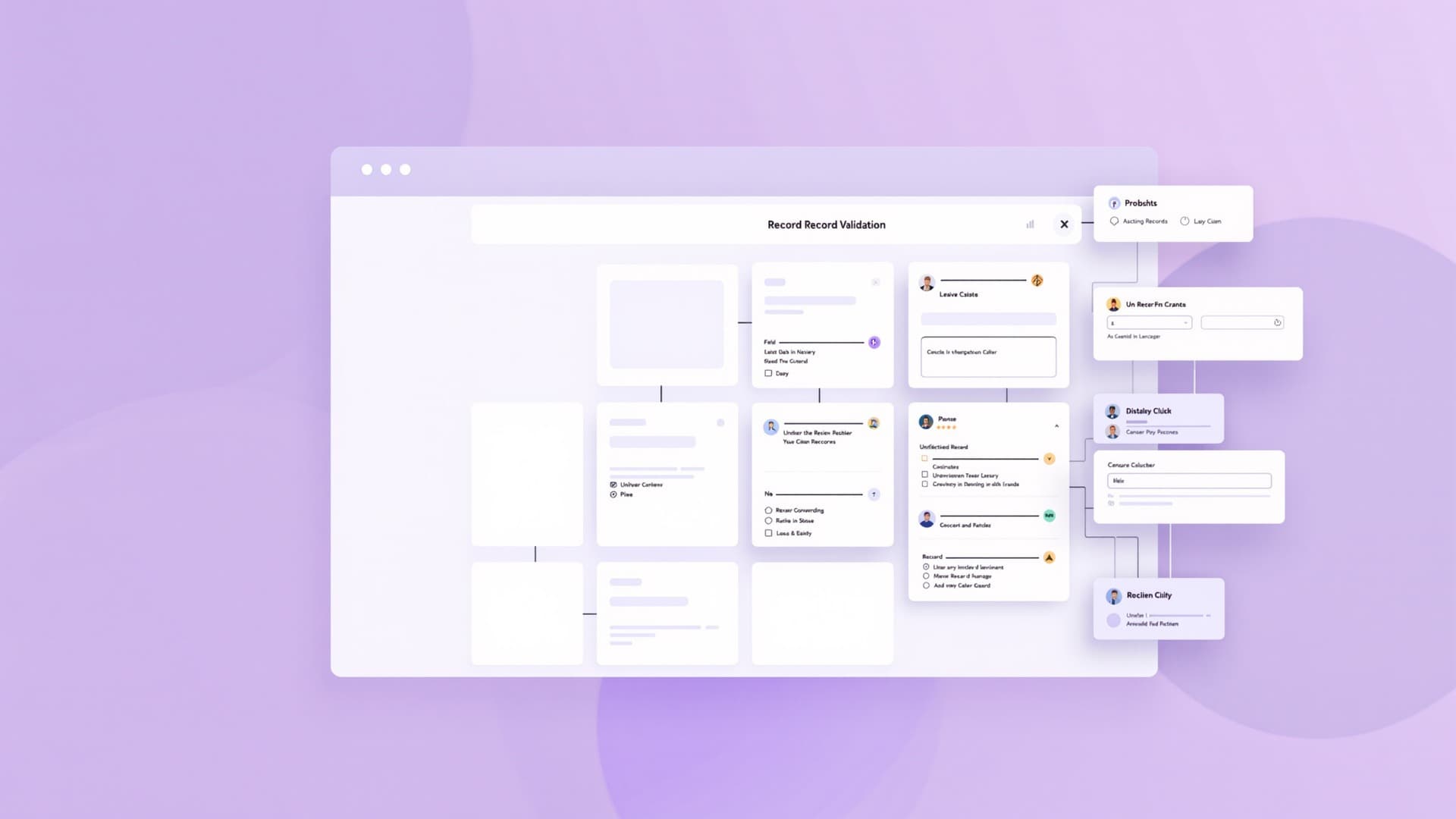
A structured intake workflow that preserves source text, validates record completeness, and routes uncertainty to review — so your team evaluates real submissions, not invented ones.
Placeholder records corrupt decisions downstream
When sparse idea submissions enter your pipeline unchecked, three things go wrong:
Invented customer details
Automated systems fill missing customer and market fields with plausible-sounding content. Reviewers can't tell what was submitted from what was fabricated.
Missing fields pass silently
Records with absent revenue models, undefined markets, or empty customer segments reach evaluation without anyone noticing the gaps.
No way to compare against the original
Once a record is normalised, the submitted wording is gone. Reviewers have no reference for what the submitter actually wrote.
How it works
1. Submit
Teams submit business-idea records through internal forms or JSON APIs. The workflow stores the exact submitted wording unchanged, creating a permanent reference for comparison and debugging.
2. Validate
Schema validation confirms required fields, checks value types, and verifies consistent Markdown or JSON formatting. Missing customer, market, or revenue details are labelled unknown — never filled with assumptions.
3. Route to review
Sparse or uncertain records are flagged and sent to a review queue. Reviewers see the source text alongside normalised fields and can inspect, enrich, or route the record — with full context for confident decisions.
What you get
Source preservation
The submitted description is stored unchanged. Compare it against normalised fields at any time — for debugging, auditing, or reviewer reference.
Schema validation
Required fields, value types, and structural consistency are checked automatically. Validation outcomes are explained in plain language near the affected record.
Conservative review routing
Records with sparse or uncertain information are sent to a review queue — not silently patched. Reviewers see what is known, what was checked, and what remains unresolved.
Pricing
Start with Pilot. Scale when your volume grows.
Pilot
Small QA teams
- 1,000 submissions included
- 3 reviewer seats
- Limited API access
Team
Product & engineering teams
- 10,000 submissions included
- 10 reviewer seats
- Full API access
Enterprise
Multiple evaluation workflows
- 50,000 submissions included
- Unlimited reviewer seats
- SSO & audit logs
Frequently asked questions
What happens to sparse records?
Records missing substantive information are flagged with a completeness status and routed to the review queue. Missing fields are labelled “unknown” — never filled with assumptions. Reviewers decide what to inspect, enrich, or accept.
What submission formats are supported?
Records can be submitted through internal forms or JSON APIs. Schema validation supports both structured JSON and Markdown-formatted submissions, checking required fields, value types, and consistent formatting.
How does review routing work?
When validation identifies sparse or uncertain fields, the record is sent to a review queue. Reviewers see the source text alongside normalised fields, the validation results, and the record's history — enough context to make a confident decision.
Is there an API?
Yes. The Team and Enterprise plans include full API access for submitting records, retrieving validation results, and managing the review queue programmatically. The Pilot plan includes limited API access.
Can I see what the submitter originally wrote?
Always. Source preservation stores the submitted description unchanged. You can compare the original wording against normalised fields at any point — for debugging, auditing, or reviewer reference.
Evaluate real submissions, not fabricated ones
Start a pilot with your team. See how structured validation and conservative review routing improve the quality of records reaching evaluation.